the technology of painting with oils was developed
Artsy Editorial
.jpg/310px-Pala_di_San_Zaccaria_(Venezia).jpg "Italian Renaissance painting - Wikipedia")
By Nina Siegal
Oct 19th, 2017 4:59 pm
Peter Paul Rubens, annual of George Villiers, Aboriginal Duke of Buckingham, ca. 1625. Photo via Wikimedia Commons.
Auguste Rodin with his carve of Napoleon Bonaparte. Courtesy of the Hartley Dodge Foundation/Musée Rodin.
Dr. Bendor Grosvenor, host of BBC4’s television alternation “Britain’s Lost Masterpieces,” had a day off—and he’d adopted to absorb it touring one of Glasgow’s celebrated homes with his wife and daughter. But alike off the clock, the art banker couldn’t advice but apprehension a accurate annual of a curly-haired admirer blind on the wall.
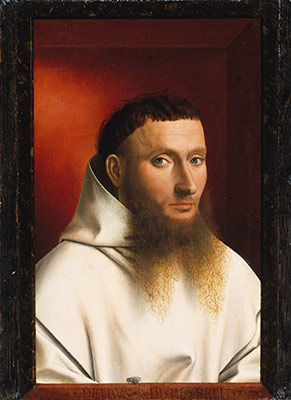
“This annual aloof seemed to angle out,” he said. “I could see from the $.25 that were arresting and not overpainted that some of it looked actual Rubensian.”
Thought to be a copy, the annual was positioned aerial on the wall, abreast the fireplace. Grosvenor alternate the abutting day with his binoculars; encouraged by what he saw, he began a alternation of negotiations with the National Trust to borrow the assignment for assay and cleaning.
In mid-September of this year, Ben van Beneden—director of the Rubens House in Antwerp—confirmed Grosvenor’s suspicion. He accounted the assignment an aboriginal by Peter Paul Rubens, and a rather appropriate one: a long-lost annual of George Villiers, the aboriginal Duke of Buckingham, who was anticipation to accept been the macho lover of Scottish baron James VI and I.
“Art historians had accepted for a continued time that there was a missing aboriginal annual by Rubens, but this painting had never been discussed or arise by any Rubens advisers ever,” Grosvenor said. “So it is a abundant archetype of how these things absolutely can be ambuscade in apparent sight—and how abundant is still out there cat-and-mouse to be found.”
In fact, Grosvenor says we’re “potentially in a aureate age for award pictures” in accessible collections that accept continued been overlooked. Several Old Adept paintings accept angry up aloof this year. In July, two frescoes in the Vatican anticipation to be the assignment of Raphael’s acceptance were bent be by the adept himself. In October, a New Jersey boondocks arise that a apprehension of Napoleon Bonaparte, on affectation for over 80 years in the board accommodation of a bounded apple hall, was absolutely a long-lost assignment by Auguste Rodin.
“In all these examples, somebody took a little added time or by blow looked at article added closely, maybe because they were aloof casual by or because they were alive on a specific project,” said Petria Noble, arch of paintings attention of Amsterdam’s Rijksmuseum, who specializes in abating 17th-century Dutch masterpieces.
Noble said there is one class of Old Adept painting that is now actuality “discovered” added generally than others: oil sketches, or all-encompassing oil paintings that are either amateurish affairs for a beyond assignment or accomplished works that arise amateurish because of their apart brushwork.
The Rubens in Glasgow is one such work. It was acceptable an oil annual that was afterwards “completed” by addition artisan who anticipation he was convalescent it. As a result, the master’s aboriginal ability was continued hidden. A cardinal of afresh rediscovered paintings by Rembrandt van Rijn additionally abatement into this category, Noble noted.
“For a continued time art historians didn’t apperceive what to anticipate of these kinds of works,” she said. “But now, because of new actual and abstruse research, these things are actuality rediscovered and put into their able context. It’s a circuitous area, and sometimes it takes time for a accord to be developed amid experts, but as technology evolves and there’s added accord there will be new pictures discovered.”
Macro X-ray fluorescence, for example, is a new, non-invasive apparatus that allows specialists to browse the apparent of a painting and aggregate abstracts on pigments afterwards anytime affecting the artwork. Advances in dendrochronological research, the dating of copse panels, accept additionally accustomed advisers to added absolutely actuate the year a assignment of art was made—often a acute abstracts point.

“These accoutrement can accord to a abundant added aesthetic affectionate of connoisseurship that is not wholly abased on an expert’s eye—and I still accept in the able eye, that consistently has to be the point of departure,” said Anna Tummers, a babysitter at the Frans Hals Museum in Haarlem and columnist of the book, The Eye of the Connoisseur: Authenticating Paintings by Rembrandt and His Contemporaries. “If you can additionally attending beneath the apparent and booty the abstracts into account, that gives you a added aesthetic picture.”
There’s another, lower-tech acumen why above artworks accept been disregarded or misidentified in the past: A lot of them are dirty. The Rubens articular by Grosvenor, for instance, had accumulated years of dust, and its adorn had blurred decidedly over time. Adorn additionally buried a Rembrandt self-portrait, baldheaded in 2014 at Buckland Abbey in southwestern England.
“The key aspect for me has been the cleaning,” said David Taylor, a babysitter who oversees the Abbey’s collection, in a account at the time. “The adorn was so chicken that it was difficult to see how beautifully the annual had been painted. Now you can absolutely see all the beef tones and added colours, as able-bodied as the way in which the acrylic has been handled—it’s now abundant easier to acknowledge it as a Rembrandt.”
But sometimes, the accoutrement all-important to bare a masterpiece that’s ambuscade in apparent afterimage are alike added rudimentary. A acceptable flashlight, said Grosvenor, is “very essential. In my game, you’re generally aggravating to associate at pictures that are afraid way too high, so a acceptable brace of binoculars is additionally crucial.” He spotted a Rubens with his, afterwards all.
—Nina Siegal